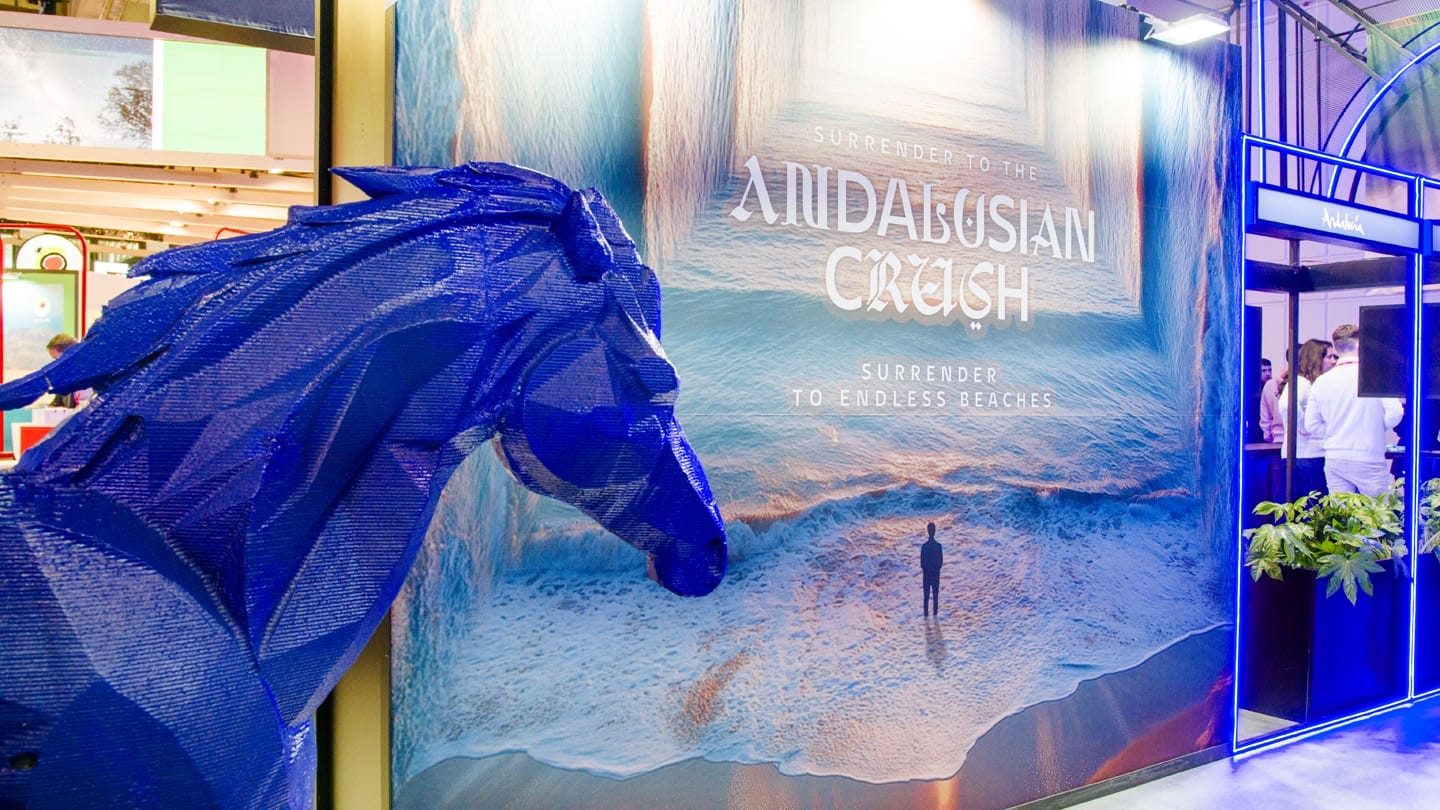
Transforming a groundbreaking advertising campaign into three immersive live trade show experiences—FITUR, WTM, and ITB—bringing “Surrender to the Andalusian Crush” from screen to reality
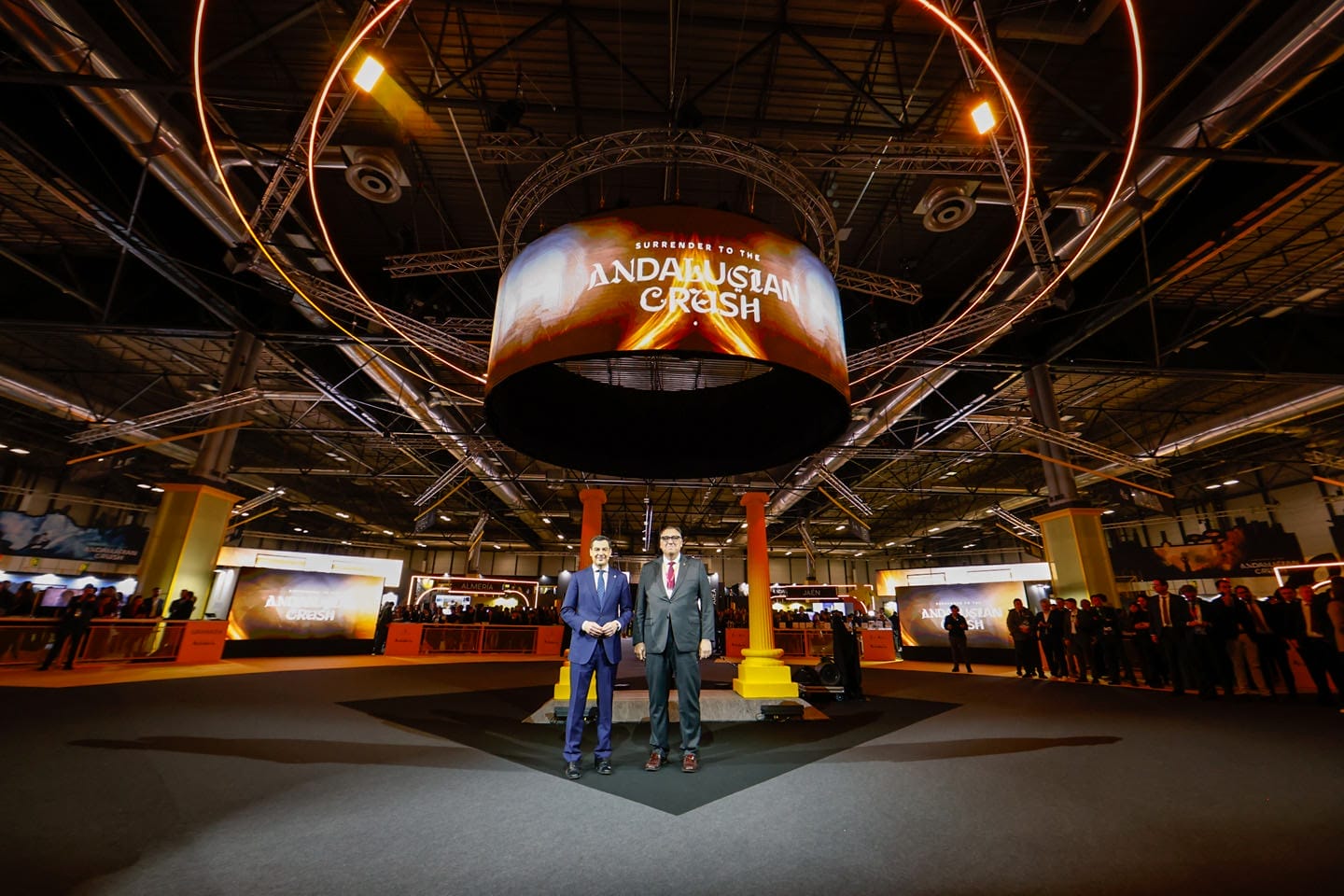
Andalusia, a region in southern Spain with strong tourism potential, launched a groundbreaking international advertising campaign featuring music composed by Hans Zimmer, the creator of some of cinema’s most iconic soundtracks. Our mission was to bring that campaign down to earth—transforming it from an audiovisual concept into a real, tangible, and multichannel experience. The goal was to create both a professional and emotional impact on key audiences at the three most strategic international trade fairs for the brand: FITUR (Spain), WTM London (United Kingdom), and ITB Berlin (Germany). At each event, we designed an immersive experience aligned with the campaign’s values, aimed at repositioning Andalusia as a modern, sustainable, and highly competitive destination. The objective was to boost brand awareness, foster B2B networking, generate real business opportunities, and inspire participants to surrender to the brand’s new narrative—and become its global ambassadors.
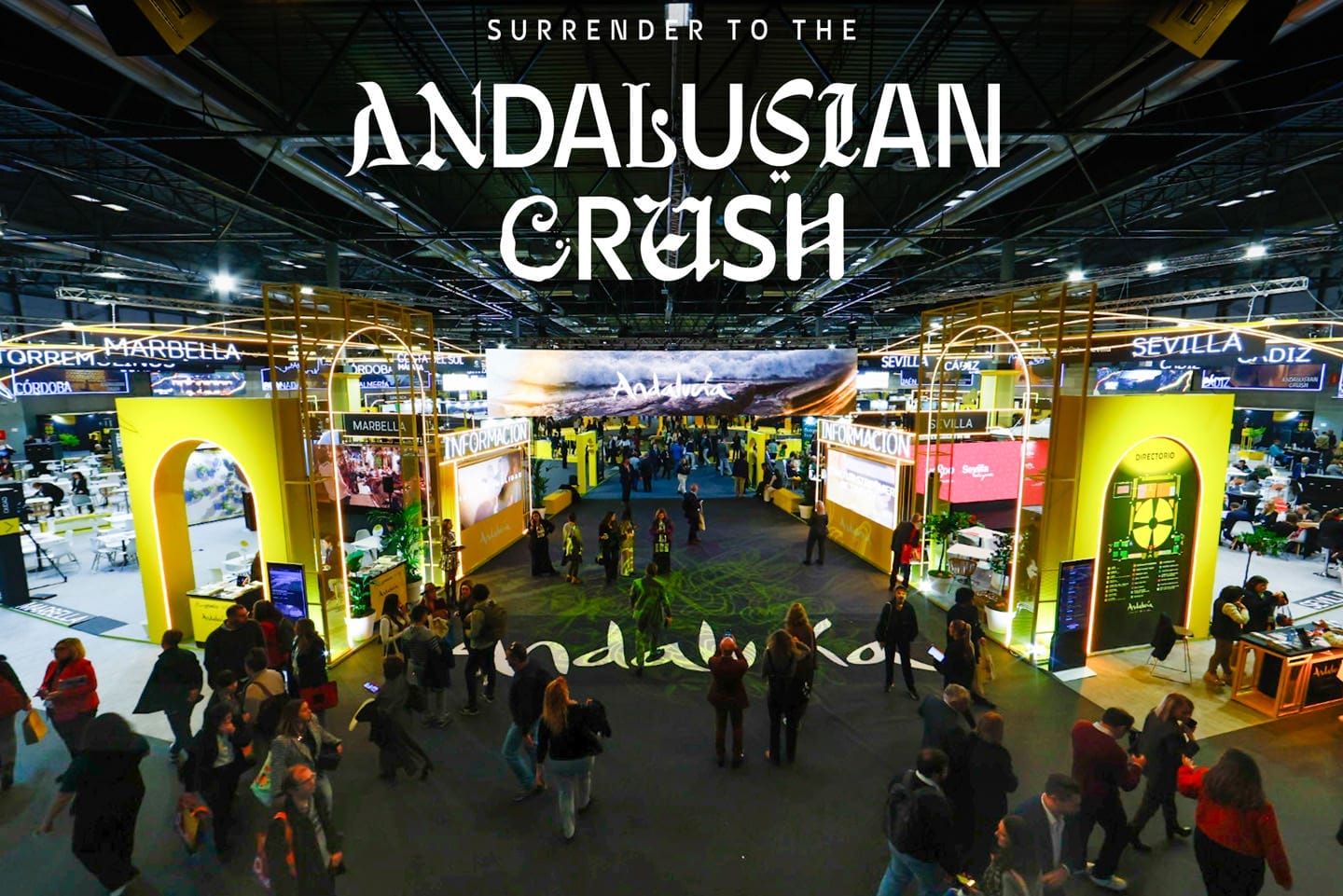
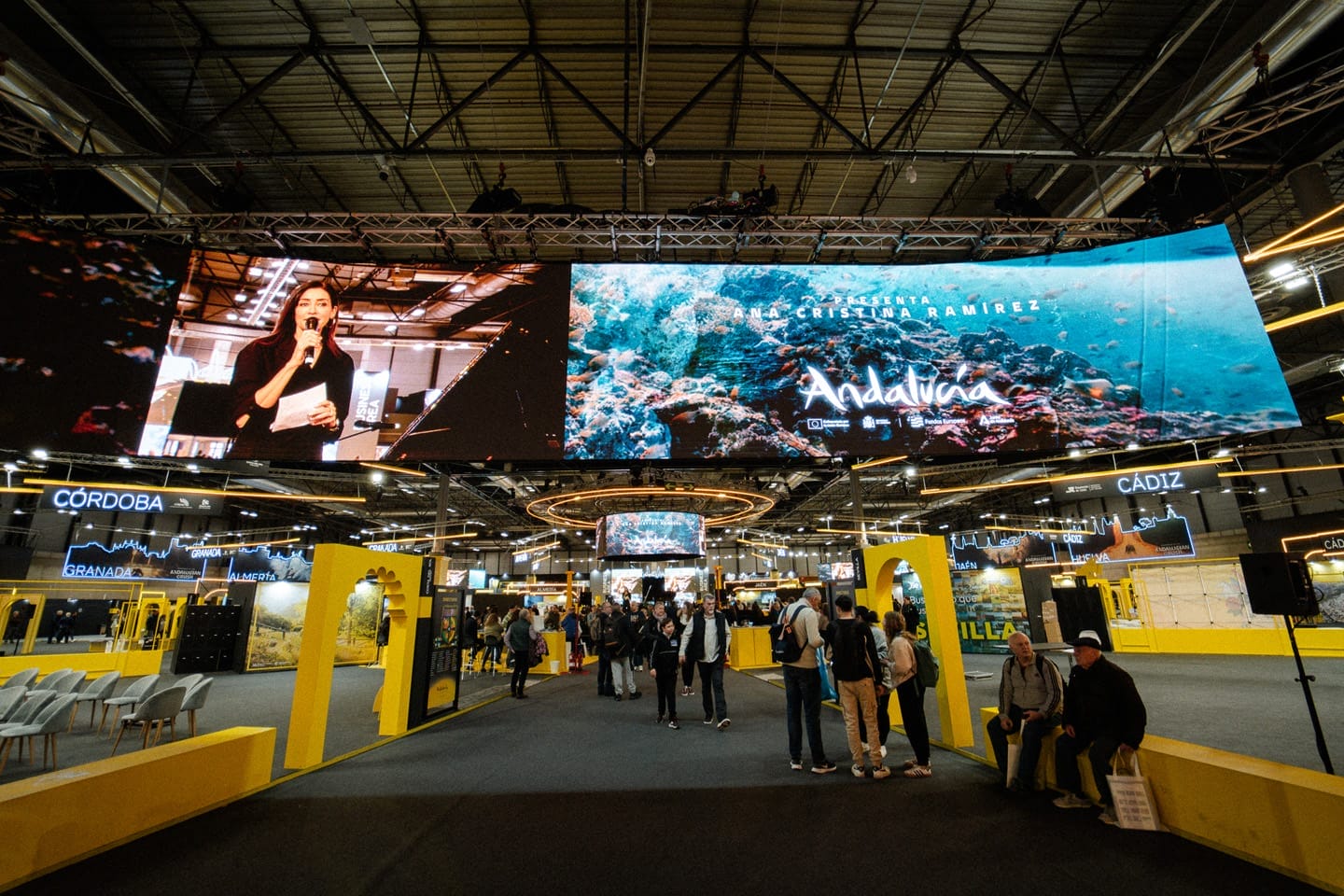
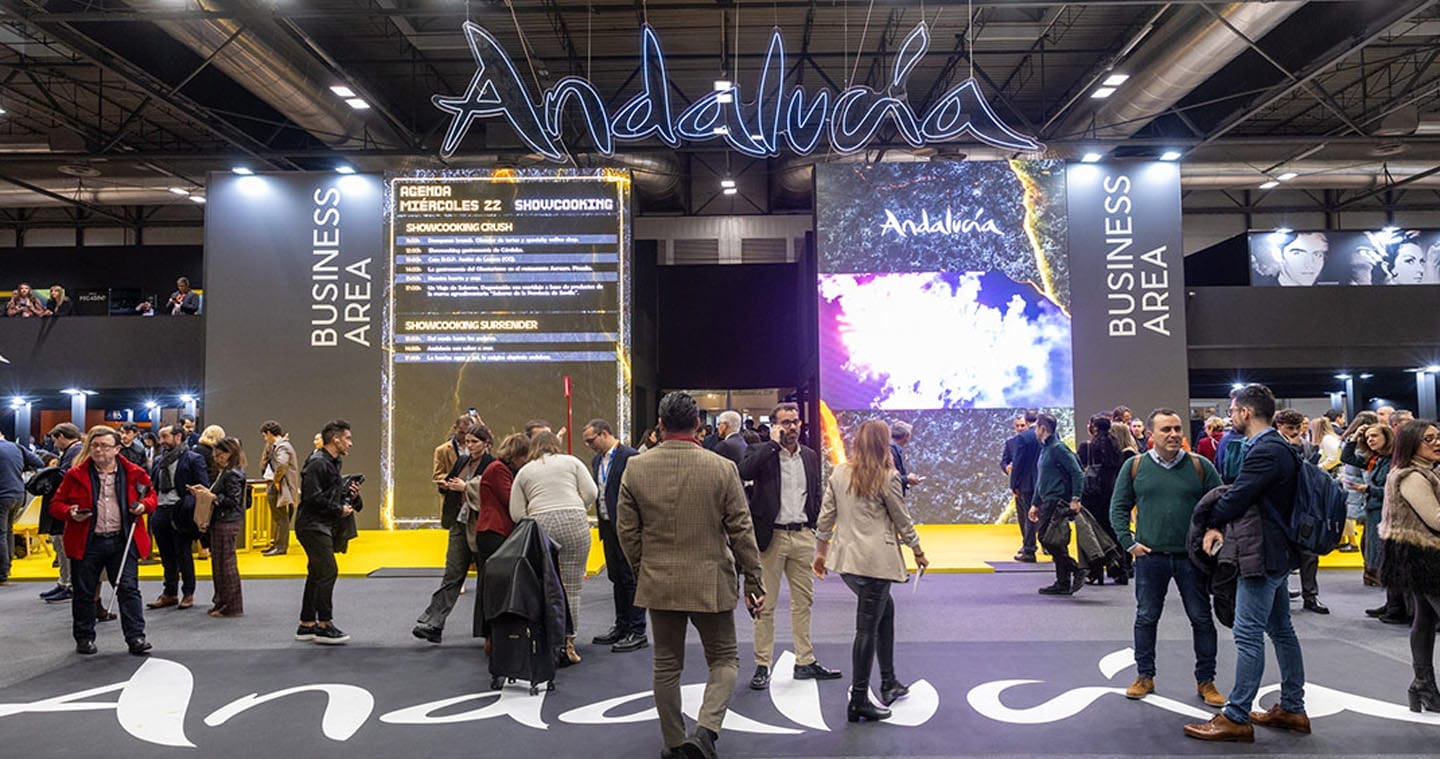
Andalusia set out to break with its traditional image and position itself as a modern, innovative, and sustainable brand. Following a bold international campaign, the challenge was to bring it into the physical realm through three high-impact trade show experiences. At FITUR, the world’s leading tourism fair, Andalusia unveiled its largest pavilion to date: 7,200 m² designed to maximize the visitor experience, host more companies, and multiply connections. Creativity served sustainability—75% of the materials were reused, yet the design had to feel vibrant and entirely unprecedented. The strategy was rounded out with a presence at WTM London and ITB Berlin, both B2B-focused, where the “Andalusian Crush Link” platform was launched. Inspired by LinkedIn but brought to life in-person, it revolutionized professional networking. Across all three venues, ten emerging technologies were integrated, including AI, AR, facial and ocular recognition cameras, machine learning, and more.